


What is a Fat Bike?
Wikipedia tells us a fat bike is an off-road bicycle built to accommodate oversized tyres, typically 3.8 in or larger and rims 2.16 in or wider, designed for low ground pressure to allow riding on soft, unstable terrain, such as snow, sand, bogs and mud.
For me a fat bike is a great way to stay in cycling shape over the winter and have a ton of fun doing it. I picked one up last year and has a blast riding and learning what fat biking is all about.
If you are looking to pick one up this winter season read on for some tips on choosing your next ride.
Tires

Size
Just like your summer bike fat bike wheels come in a couple different tire sizes. Right now the major brands offer them in 26″ and 27.5″. There are many factors at play with wheel and tires sizes and how much contact your tire has with the ground.
The general rule of thumb is the smaller the diameter the fatter tire the rim can accommodate. If you plan on riding this bike year round the 27.5″ may make more sense for decreased rolling resistance. I chose the 26″ for my bike as I only pull out my Kona Wo when the trails are snow covered.
Studs
Just like your car tires you can go all out and throw metal studs into your fat bike tires. These studs will help on icy sections of trail and if you live in an area where you see a lot of thaw and freeze cycles on your trails studs would be a worthwhile investment.
Be aware that studded tires are not cheap. A set of studded tires for your fat bike can cost as much as the ones on your car for some reason. For example the 45NRTH Wrathchilds that would fit my bike would run me $370 a tire.
To save some cash on the studs you have some options. My option was to forgo the studs entirely. So far so good, we had a good winter last year and I found I could climb and maintain traction right along side my fellow studded riders.
The second option is when buying your bike many models come with “studdable” tires. This means in the future should you feel you need that extra traction you can buy the metal studs and install them on your existing tires. I am told this is usually a two beer per tire job.
Pressure
To get that huge contact patch and maintain traction in the snow you will need to dial in your tire pressure. Make sure you pick up an accurate low pressure tire gauge.
For my winter riding conditions I am typically around 3 psi. If the trails are firmer and I want to roll a bit faster I add a bit of pressure.
Frame
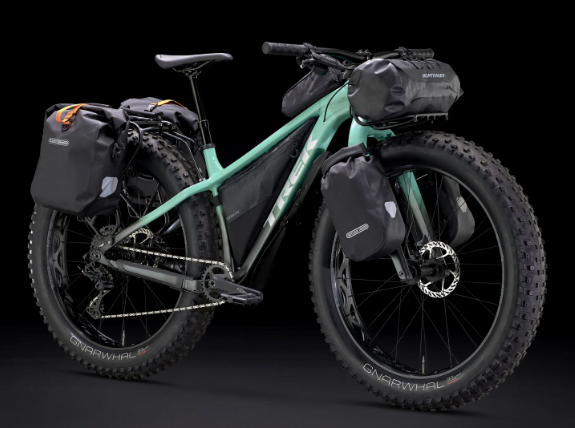
Carbon vs Aluminum vs Steel
Just like your summer bike there are plenty of options and combinations on frame materials. What you plan on using this bike for and your budget will likely come into play here. Carbon is quite a bit more expensive. There are models out there like the Trek Farley 5 where only the fork is carbon for a bit of a compromise.
For my fat bike usage and budget my aluminum Kona Wo works great. I ride it only in winter and don’t take it to seriously regarding any races or Strava times.
Fork or Rigid
Once again this feature can be largely dictated by budget and riding plans. I find on smooth snow covered single track the rigid fork on my Kona treats me just fine. When riding my fatty on dirt and over roots and rocks I know a fork would make my old body feel a little nice after the ride.
The next thing to consider is weight and mounts. Forks with moving parts always weigh more than rigid forks. If you plan on using this bike for bike packing you will trade out fork mounts for a more comfortable ride. As with most things there is always a trade off.
Components

Brakes
Unlike your summer bike you likely aren’t looking to take this rig to the bike park. You also won’t be drowning in brake options here. The choice here you will need to make is hydraulic vs mechanical disk.
Initially I scoffed at mechanical brakes when buying my fat bike. Fast forward to now after a season of winter riding through snow and I realized mechanical would have been fine. They may even be better as they are simpler to maintain.
With snow and ice your brakes matter far less than your summer ride. Once again if you plan or riding this thing year round you may want that extra braking power the hydraulics offer.
Drivetrain
When looking at fat bike drive trains you will still see them vary from 1×10 all the way to a 1×12. My summer bike has a 1×12. I rely on that great big gear ring to climb up the steepest hills. The same is not true for my fat bike. I find with the fat bike and the lower traction snow and ice provides that by the time I get to gear 10 the battle for that hill has been lost. My rear tire will simply spin out if I am in to easy of a gear.
To sum this up I don’t feel like the cassette size should be a big decision point if you plan on riding only in winter. If I went back in time I would go for a 1×12 just so I only need to buy one type of master link to carry in my tool pouch ;).
Just like summer bikes the more you spend the higher spec group set you will likely get. The ole’ Shimano Deore gets it done just fine for me but mileage will vary. To me this is an easy upgrade once the original cassette and chain wears out.
One of the most important factors for your winter drivetrain is maintenance. With snow and ice comes salt and sand on the roads and sidewalks. This inevitably carries over into the trails. While you may slack a little on cleaning your summer bike after each ride when riding in winter ensure you at the very least give your drivetrain a rinse after a ride.
Accessories
If you like to go outside when its cold you likely already have all the gear you need to start fat biking. Like any winter activity layers is key here. You should be a bit cold when you start your ride and as the blood gets moving you will warm right up. Invest in a good pair of shoes or boots and some good gloves.
A key item for winter fat biking is a good set of lights. With the sun setting around 16:00 a good light is a key safety item. You can opt for just the helmet mount, just the bar mount or be like me and get one of each. Built in backup in case one fails. Anyone you pickup at a bike shop will be fine. If I could afford it I would opt for the Outbound Lights. A friend of mine has these and if he is riding behind me I could almost leave mine at home. They are that bright!
Bottom Line
Where I live most people stick to their skinny trail bike until the snow and cold comes around. If you are looking for a year round do it all bike a fat bike may work for you. Since you are only buying a single bike, you can likely afford to spend a little more on things like forks and bigger drivetrains.
Set your budget, nail down when and how you plan on riding and go shopping. Most of the big brands offer a fat bike model that will fit your needs.
Fat biking is a blast and is my favorite way to keep the legs in pedaling shape through the winter. I hope I helped simplify your decision.
I love how well kept the Fort Saskatchewan Single Track Trails are all winter and love riding out there. Where is your favorite place to ride your fatty? Let me know in the comments below!
Check out my other posts for more great biking content.
